Temple Bar Panel: The Future of the Profession
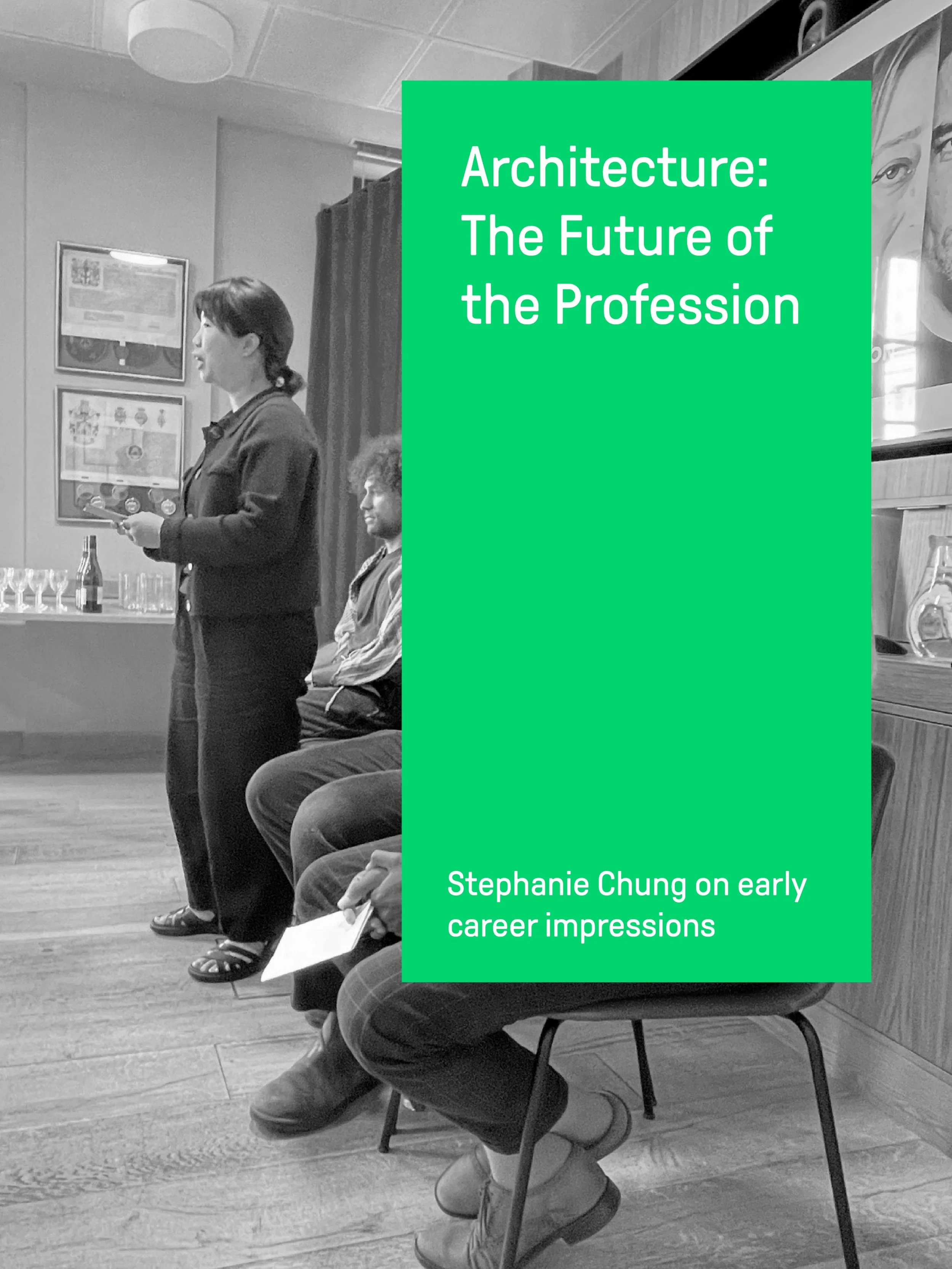
Earlier this year, I was invited to speak at Temple Bar as part of a panel on Architecture: The Future of the Profession, alongside Jalal Sajan, James Read and Rishi Lal.
The conversation centred on professional identity, the protection of architectural function and the question of how architecture responds to an increasingly fragmented industry. I approached it through a related concern: flight risk, and why so many talented people question whether they ca (or want to) remain in the -profession.
Questions of staying and leaving have long been familiar to me. I grew up in Hong Kong and later moved between Hong Kong, New York and London, navigating different cultures, disciplines and routes through practice. My relationship with architecture has never been entirely linear.
Before studying architecture, I apprenticed with a stringed-instrument maker, eventually designing and building a cello. Later, during university, I stepped away from a conventional placement to work near the Tibetan border as a conservation and photography assistant. I spent time speaking with villagers and documenting their homes, experiencing a form of architectural work that felt immediate, human and closely connected to place.
Entering professional practice could therefore feel like a certain amount of whiplash. The early years involved plenty of production work, mark-ups and late nights that did not always resemble the expansive version of architecture I had imagined.
Over time, however, my understanding of the profession became more generous and more realistic. The work grew increasingly interesting as I gained responsibility, developed technical confidence and became more involved with clients, collaborators and the decisions shaping a project. I also learned to separate architecture from my entire identity and to value the wider life, interests and experiences that allow us to bring greater insight back into our work.
This shaped how I approached the panel’s discussion about protecting architectural function.
Competence, accountability and public safety clearly matter. There is a strong argument that certain responsibilities should sit with professionals who are properly trained and accountable. Yet I remain cautious about responding to the profession’s challenges by simply narrowing its boundaries or adding further layers of bureaucracy.
Protection should not mean retreat.
If architecture defines itself too defensively, it risks reducing its sphere of influence at precisely the moment when architectural judgement is needed across development, policy, sustainability, procurement and delivery. Many of the roles adjacent to conventional practice engage directly with the larger forces that determine how places are funded, shaped and experienced. They should not necessarily be viewed as evidence that people have abandoned architecture, but as part of a wider architectural ecosystem.
The more difficult question is why remaining within traditional practice can feel unsustainable.
For women and practitioners from underrepresented backgrounds, the decision to stay is shaped by more than individual resilience. Pay, progression, recognition, long-hours cultures and caring responsibilities all affect whether people can continue to grow while maintaining agency over their lives and careers.
A profession cannot protect its future only by regulating who may perform particular tasks. It must also create conditions in which talented people can afford to remain, develop and imagine a meaningful future within it.
For me, protecting architectural function should ultimately mean making architectural judgement properly valued and sustainable. It should strengthen the profession’s ability to contribute broadly rather than encouraging it to withdraw behind increasingly rigid boundaries.
Otherwise, we risk protecting the title-or even the function-while continuing to lose the breadth and the people that make architecture worth protecting in the first place.
I am grateful to Temple Bar for creating the space for an open and timely conversation, to my fellow panellists for their perspectives, and to Child Graddon Lewis for supporting me in contributing to it.
A Community I Didn't Realise I'd Built
One of the most meaningful parts of the evening was seeing so many colleagues, former colleagues and past secondees turn up to support me - many of whom I now feel lucky to call friends.
When I left New York, I worried about having to rebuild a professional community from scratch. That evening was perhaps the first time I fully realised that, over the years, I had quietly built one here: across different practices, projects and stages of my career.
“Networking” can have a transactional reputation, but the relationships that matter rarely feel like networking. They are built through shared work, mutual respect, generosity and simply showing up for one another. Seeing so many familiar faces in the room was incredibly touching, and made the experience feel even more special.